
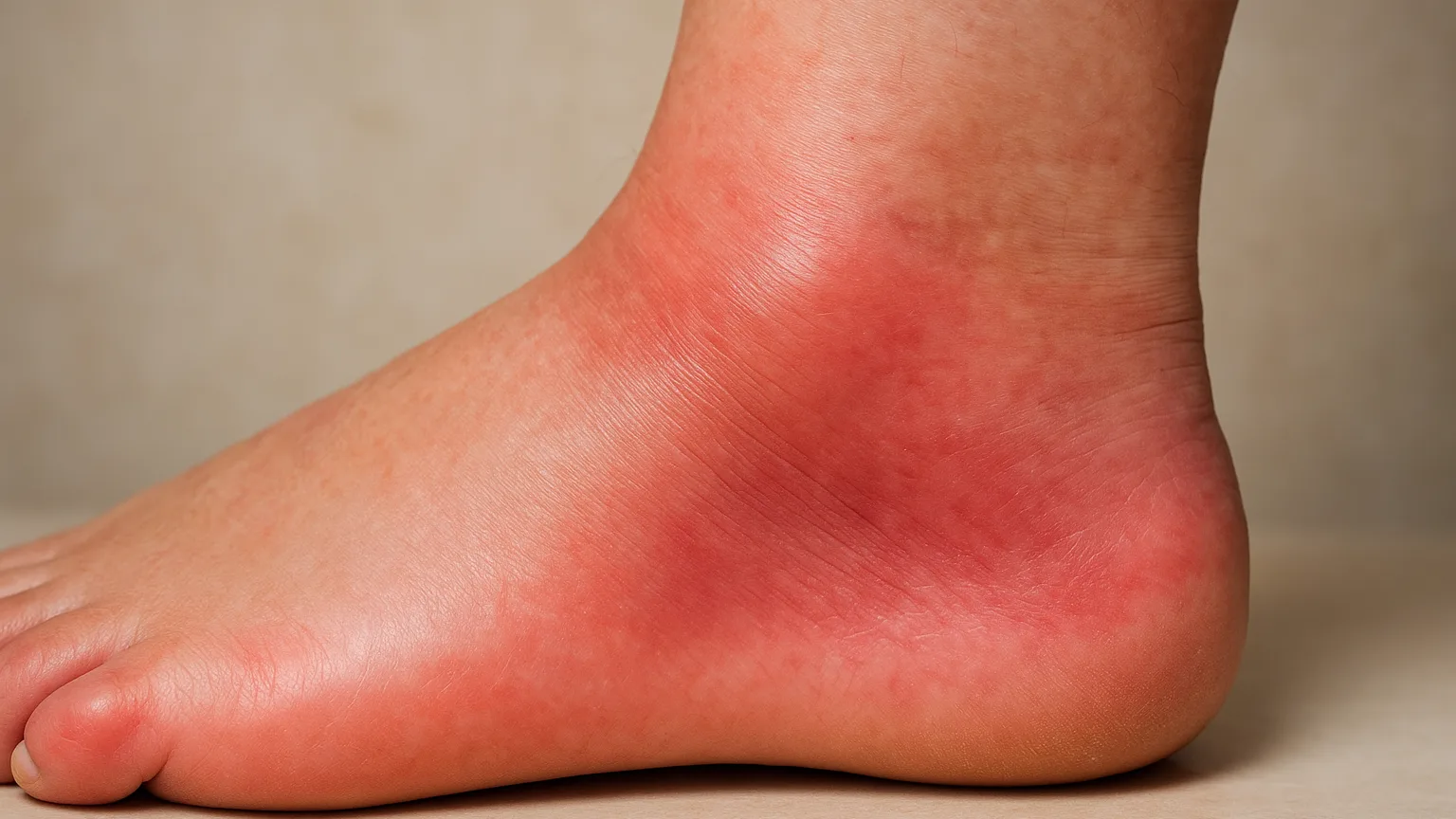
You sit for nine hours a day at home. Then you land in Lisbon, Rome, or Kyoto and walk 22,000 steps before dinner. Your Achilles tendon did not get a heads-up. It went from mild office duty to hauling your body weight up hills, down subway stairs, and across uneven stone for six days straight.
Tendons adapt slowly. Muscles get sore and recover in two days; tendons hold a grudge for weeks. That gap is why so many people come home from a great trip with a heel that hurts more than it did on day three of the vacation. The good news is that an overloaded Achilles gives you clear signals long before it becomes a months-long problem. Most travelers walk right past them because they read them as normal tiredness. Below are seven signs worth taking seriously, written so you can check yourself in a hotel bathroom at 7 a.m. with no equipment.
Why Vacation Walking Hits Tendons Harder Than Home Walking
It is not just the volume. It is the mix of things your tendon has never rehearsed together.
- Cobblestones and uneven stone force your ankle to correct sideways hundreds of times a mile, loading the Achilles at odd angles.
- Hills and stairs multiply the force through the tendon compared with flat ground.
- Flat travel shoes and sandals often have zero heel lift, so the tendon sits in a longer, more stretched position all day.
- Standing still in queues keeps the calf loaded without the pumping action that walking provides.
- Short nights and long flights cut into the recovery window when tendon tissue actually rebuilds.
Stack those together for four days and even a healthy tendon starts to complain. If you have had heel or Achilles trouble before, the timeline gets shorter.
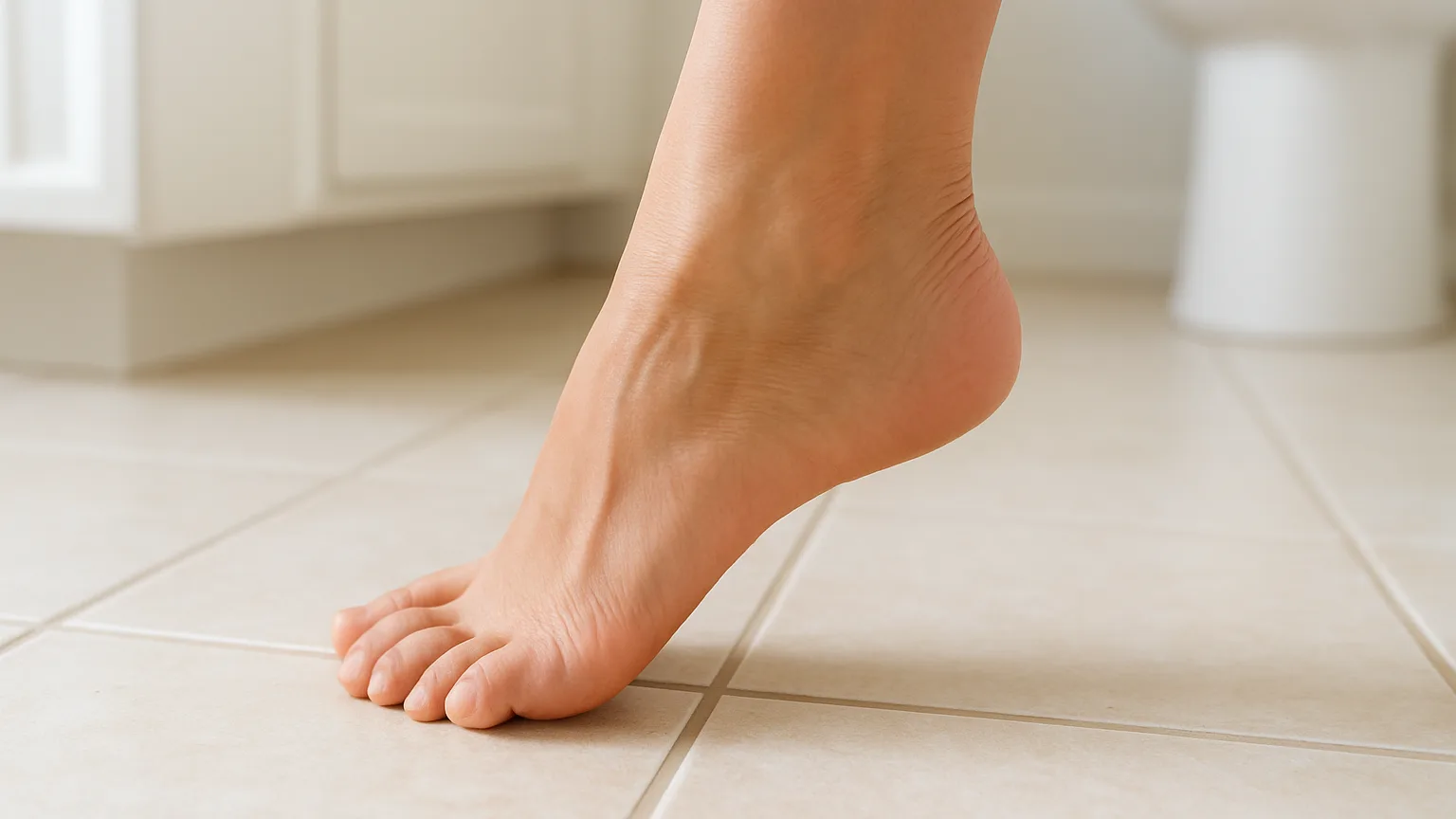
Seven Symptoms To Check In Your Hotel Room
1. Morning Heel Stiffness That Needs A Warm-Up
You swing your legs out of bed and the first ten steps feel like walking on a wooden peg. Then it loosens up and you forget about it. This is the single most reliable early sign of Achilles overload. Healthy tendons feel a bit tight after a big day; an irritated tendon needs a genuine warm-up before it moves normally. If the stiffness lasts more than about five minutes, or is worse on day five than it was on day two, your tendon is losing the recovery race.
2. A Pinching Catch On Stairs
Going up a staircase, you push off the ball of your foot and feel a sharp pinch just above the heel or right where the tendon meets bone. Not an ache. A catch. Stairs load the Achilles through its full range under high force, so they expose problems that flat walking hides. Metro stations are where most travelers first notice this, usually while carrying something.
3. Swelling That Is Still There At Breakfast
Puffy ankles after a long day in warm weather are common. Swelling still visible the next morning is not. Compare both ankles side by side while sitting on the edge of the bed. If one Achilles looks thicker, or the skin over it looks smoother and shinier than the other side, the tissue is inflamed and not clearing overnight.
4. A Tender Spot You Can Find With Two Fingers
Pinch the tendon gently between thumb and index finger, starting just above the heel bone and working up toward the calf. Overload usually produces one clear sore point, often two to four centimeters above the heel, sometimes a thickened lump you can feel. Generalized calf soreness is muscle. A single pinpoint tender spot on the cord itself is tendon.
5. Pain That Warms Up, Then Comes Back Worse
This pattern fools people constantly. The first mile hurts, mile two feels fine, so you keep going. Then at hour four the pain returns sharper than the morning version. Tendons tolerate load for a while and then fail to keep up. If your pain follows a hurt, fade, return arc, you are past the point where more walking helps.
6. Creaking, Grating, Or Squeaking
Sit down and slowly point and flex your foot with your fingers resting lightly on the tendon. Some people feel a fine crackling, like crushing dry leaves, or hear a faint creak. That texture change means the sheath around the tendon is irritated. It is not dangerous on its own, but it is a clear signal to cut your daily mileage now rather than at the airport.
7. You Have Started Changing How You Walk
Are you turning your foot outward slightly? Landing flatter to avoid pushing off? Taking stairs one at a time with the same leg leading? Letting your partner walk ahead on hills? Compensations happen below conscious thought, and they are often the honest answer when your brain still insists the heel is fine. A limp you did not choose is a symptom.
How Many Signs Is Too Many?
One sign on the last day of a big trip usually means fatigue. Two or three together, or any single sign getting worse day over day, means the tendon is accumulating damage faster than it can repair. Sharp pain during your first steps out of bed that does not improve with movement at all deserves a doctor rather than a rest day.
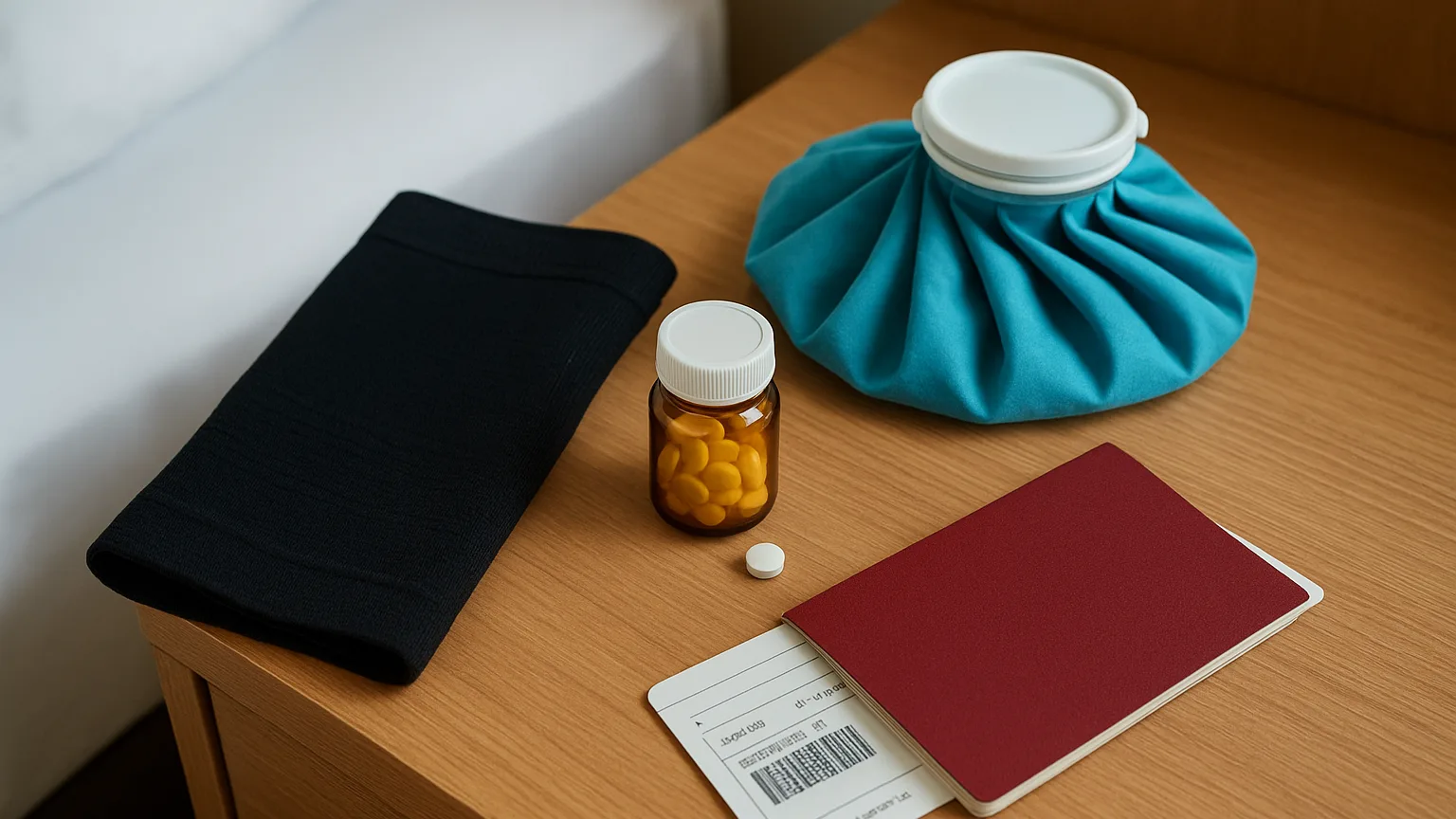
Damage Control While You Are Still Away
You do not have to cancel the rest of your trip. You have to change the dose. Tendons respond to load management far better than to total rest, and both extremes cause problems.
- Add heel lift immediately. A folded washcloth, a spare insole, or a cheap gel heel pad from any pharmacy shortens the tendon's working length and drops the load. Use one in both shoes so your hips stay level.
- Switch to a shoe with a real heel-to-toe drop. Flat canvas sneakers and thin sandals are the worst offenders. A running shoe with cushioning under the heel buys you thousands of steps.
- Cap your continuous walking. Break the day into 45-minute blocks with a real sit-down between them. A cafe stop is treatment, not a detour.
- Trade stairs for lifts and escalators. This removes the highest-force movement of your day.
- Do slow calf raises, not stretching. Three sets of ten, three seconds up and three down, holding a wall. Gentle loading helps tendon tissue; aggressive stretching against a curb often makes an irritated Achilles angrier.
- Elevate at night. Twenty minutes with your feet on a pillow helps the swelling clear before morning.
- Use cold for comfort only. An ice pack eases pain but does not fix the load problem underneath.
Book a taxi or a tram for the return leg of your longest planned day. Travelers who ration their steps deliberately almost always see more, because they are not staggering back to the hotel at 4 p.m. with nothing left.
Reshaping The Rest Of Your Itinerary
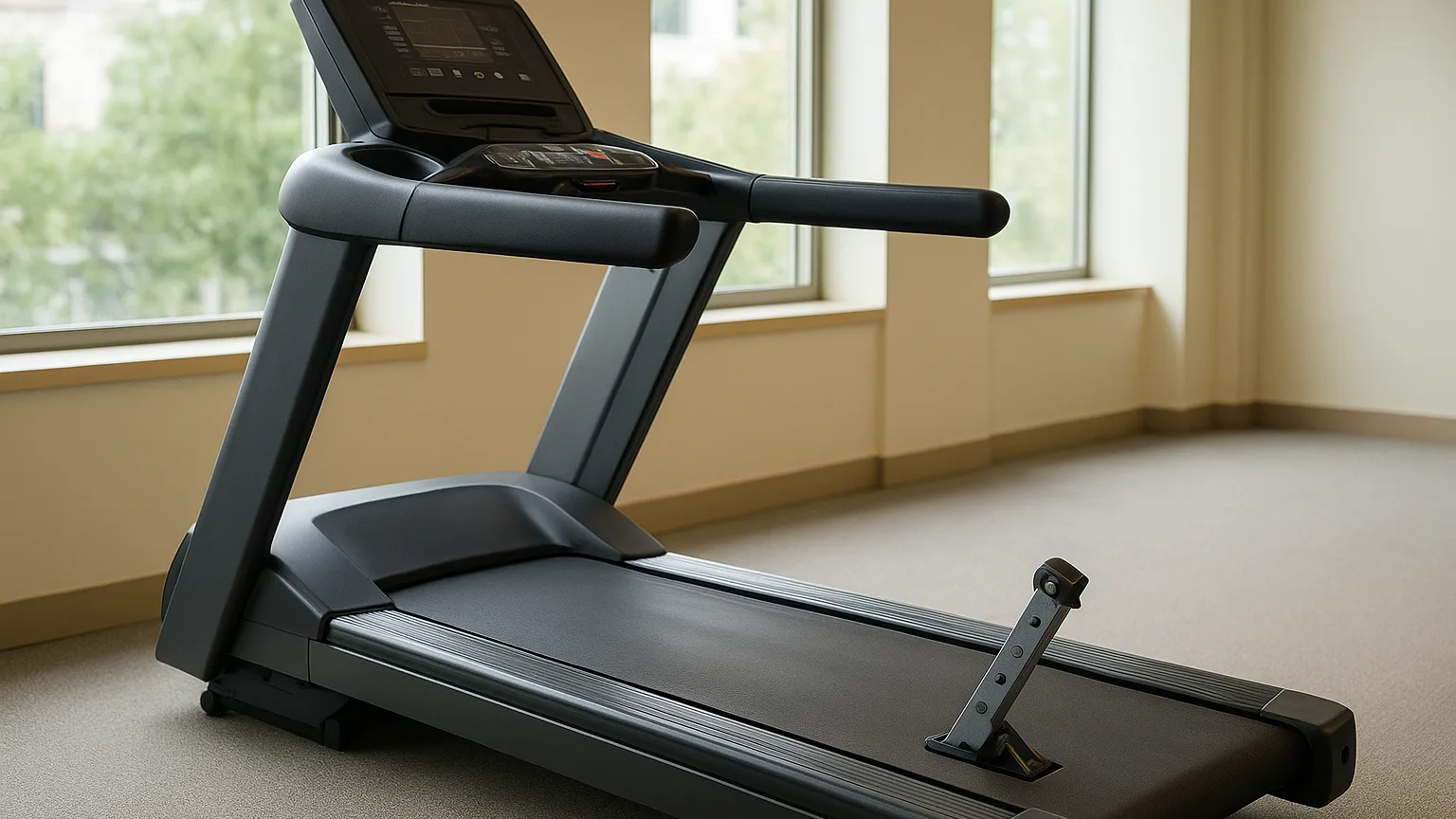
Once you notice two or more signals, treat the rest of your itinerary as a rehab plan with sightseeing attached. Museums, boat tours, food markets with benches, and long lunches all feel like travel without loading the tendon. Save the hilltop viewpoint and the walking tour for a day when your morning stiffness has eased. Keep your fitness going in ways that do not punish the heel: swimming, a stationary bike with the seat high enough that your ankle stays relaxed, upper-body work. This is where a lot of people go wrong, since hotel gym mistakes that reignite can undo three days of careful pacing in twenty minutes of enthusiasm. Skip the treadmill sprints and the jump rope.
Pack For The Tendon You Have
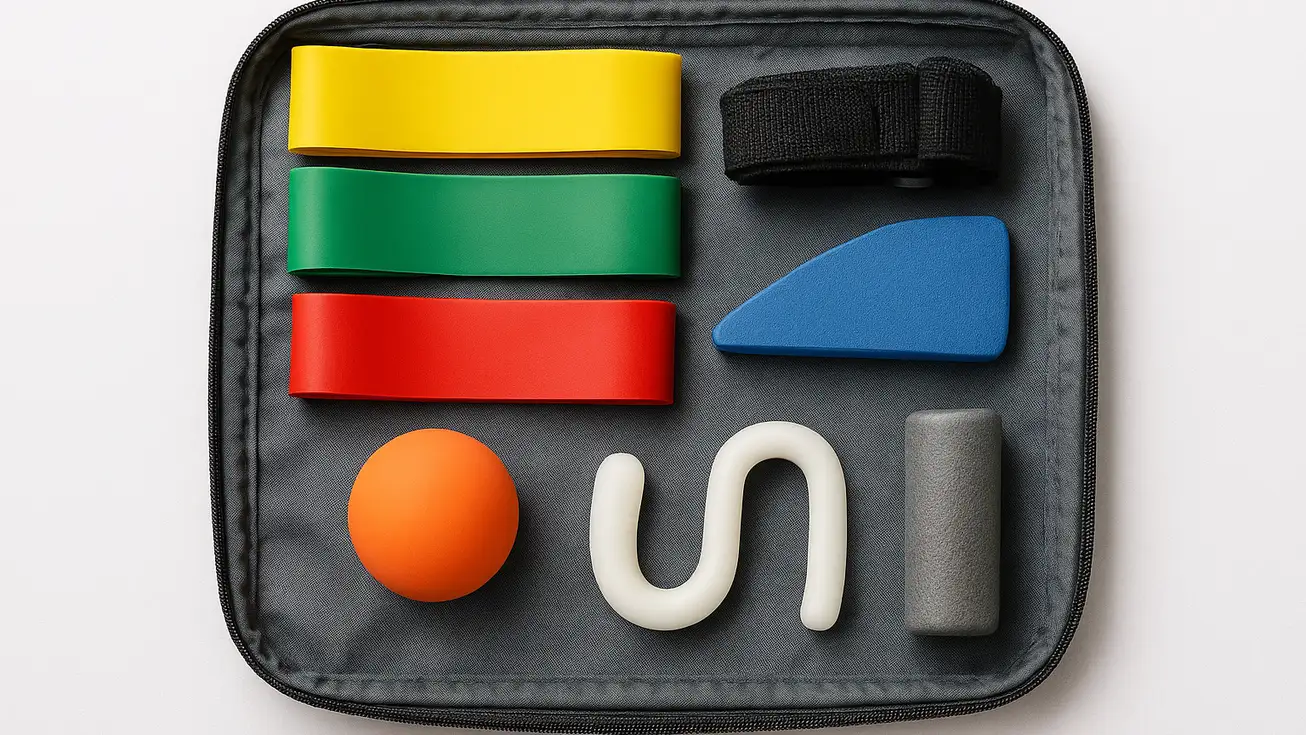
If heel pain is a known issue for you, the fix starts before you leave. Gel heel cups, a lacrosse ball for calf work, a resistance band, and a pair of shoes with actual heel drop weigh almost nothing and change the trip completely. Building $35 carry-on kit that keeps into your luggage means the daily loading work you do at home does not stop the moment you check in.
The First Week Back Matters Most
Plenty of travelers feel fine on the flight and get blindsided three days later, because tendon symptoms often peak 24 to 72 hours after peak load. Do not go straight back to your normal running or gym routine in week one. Give the tendon seven to ten days of slow calf raises, easy walking, and heel lift in your daily shoes. Symptoms still there after two weeks, or a tendon that stays thickened, is worth a proper assessment with a physio or sports doctor.
Your Heel Keeps The Receipts
Going from 4,000 steps a day to 20,000 on stone and stairs is a training load, and nobody would attempt that jump on purpose without preparation. The seven signals are your tendon's early warning system: morning stiffness, a pinch on stairs, overnight swelling, a pinpoint tender spot, pain that fades then returns, creaking under your fingers, and a walk you did not choose. None are catastrophes alone; all are worth acting on immediately. Lift the heel, shorten the walking blocks, avoid stairs, load the tendon gently instead of stretching it hard, and rebuild the itinerary around what your body can absorb today. Travelers who do this keep both the memories and the ability to walk the dog next week. Those who push through spend three months negotiating with a heel that no longer forgives anything, which is a far worse souvenir than a missed viewpoint.
Tendon pain is slow to build and slow to settle
Start with the injury itself, then look at what treatment actually does for a tendon that has stopped healing on its own.