
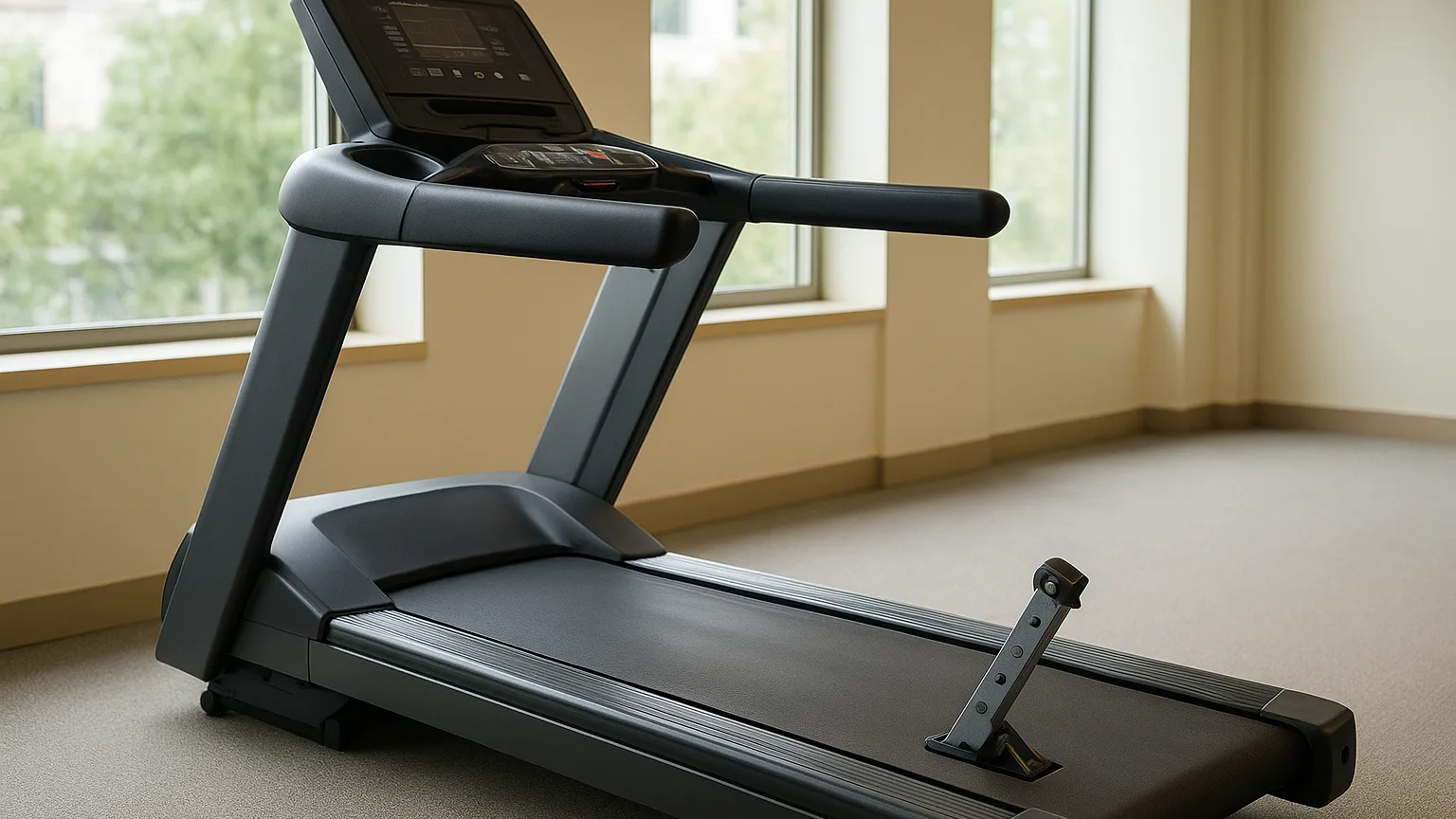
There is a strange pattern that shows up in physio clinics every January and every August. People come back from a week away, and the tendon that had been quiet for months is loud again. The knee. The shoulder. The outside of the elbow. Nothing dramatic happened. They just used the hotel gym.
Here is the thing most travel fitness advice misses. A hotel gym is not a smaller version of your gym. It is a different gym with the same names on the equipment. The dumbbells are a different shape. The cable stack starts at 15 pounds instead of 5. The bench has more padding, so your shoulder sits at a slightly different angle. None of that matters much to a muscle. It matters a lot to a tendon.
Tendons adapt slowly, and they respond to load history, meaning what you have been doing for the last few weeks rather than what you did today. Change the machine, the surface, the angle or the volume, and you have handed your tendon a brand new stimulus while it was expecting the old one.
The Hidden Math of a Travel Flare
Most people assume a flare needs a big trigger. A heavy set. A slip. In reality, most travel-related tendon pain comes from three small changes stacking on the same day.
- Change one: You skipped your usual warm-up because the gym was crowded and you had a 9am boat tour.
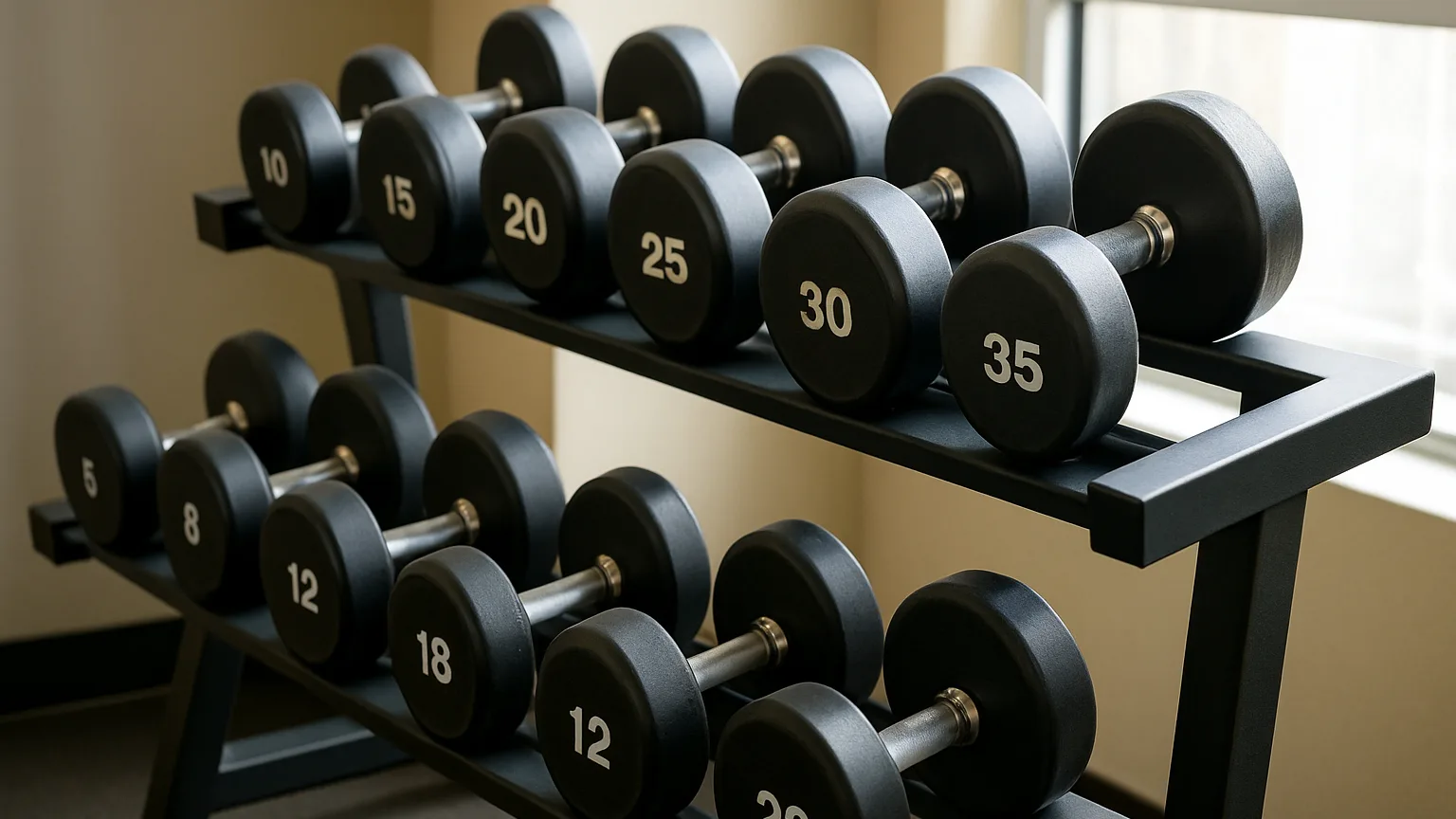
- Change two: The smallest dumbbell for your rotator cuff work was 10 pounds instead of 5.
- Change three: You did three extra sets because you had missed two days.
Any one of those on its own is survivable. All three at once is a 200 percent jump in tendon load with zero preparation. Tendon pain also runs on a delay: you often feel fine walking out of the gym and terrible the next morning, which is why so many people blame the flight or the mattress instead of the workout. What follows are the five habits that cause most of these flares, in the order they usually happen.
Five Small Choices That Set Off a Flare
1. Skipping the Ramp-Up Because the Gym Is Small
Hotel gyms feel temporary. There is one other person in there, the room is the size of a bedroom, and standing around doing calf raises feels awkward. So people start their first working set within three minutes.
A tendon needs a ramp-up more than a muscle does. Warm tendon tissue stretches and returns energy more efficiently than cold tissue. Skip that, and your first hard rep is the stiffest rep of the day, which is exactly backwards.
The fix does not need floor space. Five minutes of easy, progressive movement is enough: body weight squats to a bench for the knees, slow band or towel pull-aparts for the shoulders, light wrist curls or repeatedly opening and closing your hand against resistance for the elbow. Then two build-up sets at roughly half your working load before anything heavy.
2. Maxing Out on Machines You Have Never Used
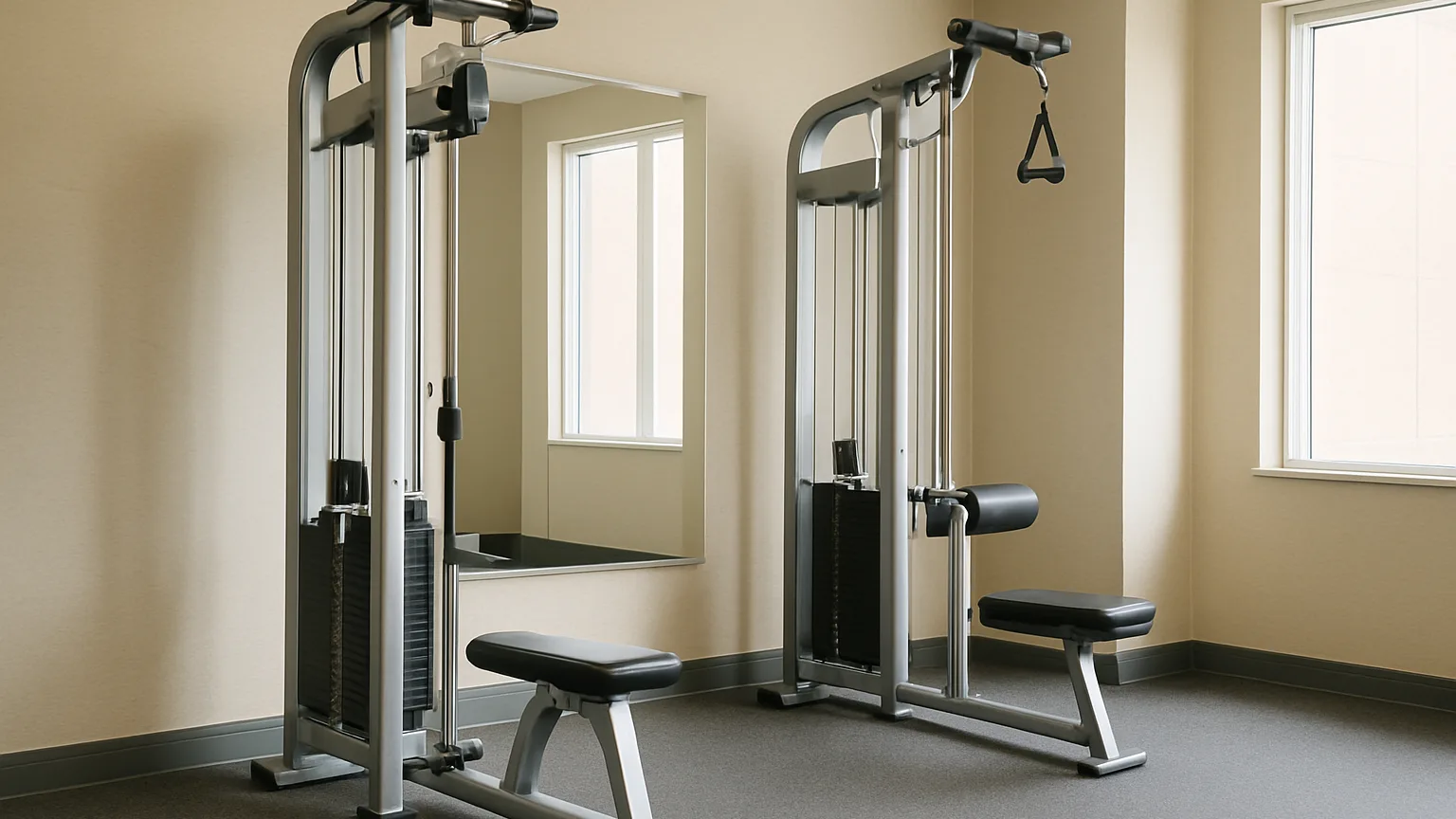
This one catches strong people hardest. You leg press 300 at home, so you load 300 on the resort leg press. But that machine has a different seat angle, a different lever arm and a different starting knee flexion. The number on the plate means almost nothing across two different machines.
Patellar tendinopathy loves this mistake. A deeper starting knee bend dramatically increases the load through the front of the knee at the same weight. Same story with shoulders: a chest press machine with fixed handles that sit wider than your natural path drives the rotator cuff into a position it has not trained in.
The rule that saves you: on any unfamiliar machine, start at 60 percent of your normal load and add from there. If it feels stupidly easy, good. You will still get a training effect, and you will have learned the machine before it teaches you something.
3. Cranking the Treadmill Incline
Resort treadmills often have limited belt length, so people raise the incline instead of the speed. It feels productive. It is also one of the fastest ways to overload the Achilles and the calf-tendon complex if you have not been doing hill work at home.
Incline walking and running shift load toward the back of the lower leg and increase how long the tendon spends under tension per step. Twenty minutes at 8 percent, when your normal running is flat, is a genuinely new stimulus, and the sightseeing you already did that day pushes the total higher. This is the same accumulation problem that shows up when warning signs your sightseeing marathon turns a fun day into a limp, and the gym session is often just the final straw.
4. Cold-Start HIIT
The hotel gym has three machines and no space, so the obvious answer is a 20 minute high intensity circuit: jump squats, burpees, kettlebell swings, mountain climbers. It feels like the perfect travel workout.
It is also almost entirely explosive, high-rate loading, which is the most demanding thing you can ask of a tendon. Jumping and swinging load tendons at speed, and speed multiplies force. Doing that as the first thing your body does after a flight, a long car ride or a night on a strange pillow is asking for a flare. HIIT is not the enemy. Cold, unprepared HIIT is. Give yourself eight to ten minutes of gradual build before anything with a jump or a swing in it.
5. Doubling Volume to Make Up for Missed Days
The catch-up workout is the most common flare trigger of all, and it is entirely psychological. You missed Monday and Tuesday, so Wednesday becomes a double session. Your muscles can absorb that. Your tendons register a sudden spike in weekly load, and spikes are what tendons respond to worst. You cannot bank training and you cannot repay it. A missed day is gone. Train Wednesday like a normal Wednesday.
A Closer Look at Borrowed Equipment
The machine issue is worth an extra minute, because it is the least obvious of the five. When you train on the same equipment for months, your tendons adapt to a very specific range of motion, load curve and joint angle. That adaptation is narrow, and it does not transfer neatly to a machine built by a different manufacturer with a different cam.
- Sit in it empty first. Move through the full range with no weight and notice where the tension lands. If it lands somewhere new, respect that.
- Watch the start position. Most tendon trouble comes from the deepest, most stretched part of the movement. Adjust the seat so you are not starting deeper than you normally would.
- Check the smallest available weight. If the lightest dumbbell is 10 pounds and your rotator cuff work uses 5, do not just use the 10. Slow the tempo, shorten the range, or switch to a band.
That last point matters for elbows specifically. Lateral elbow tendinopathy tends to flare from grip work more than from lifting. Unfamiliar thick-handled dumbbells, rusty grips, or a fat-bar cable attachment can double your grip demand without changing the weight on the stack at all.
What a Low-Cost Road Workout Looks Like
The goal on the road is not progress. It is maintenance without cost. Tendons hold their capacity reasonably well over a week or two, so you do not need to chase anything. You need to keep tissue stimulated and avoid spikes.
- Eight minutes of graded warm-up. Walk, then move the joints you plan to load, then two build-up sets.
- Two or three main lifts at 70 to 80 percent of home load. Familiar patterns only. Not the day to try the standing hip machine you have never seen.
- Slow tempo over heavy weight. Three seconds down on every rep gives tendons useful load at lighter weights. This is the best trade in travel training.
- Isometrics for anything already grumbly. Thirty to forty five second holds, moderate effort, four to five rounds. They often reduce pain in the moment and keep the tendon loaded.
- Stop with two reps left in the tank. Every set. No exceptions on the road.
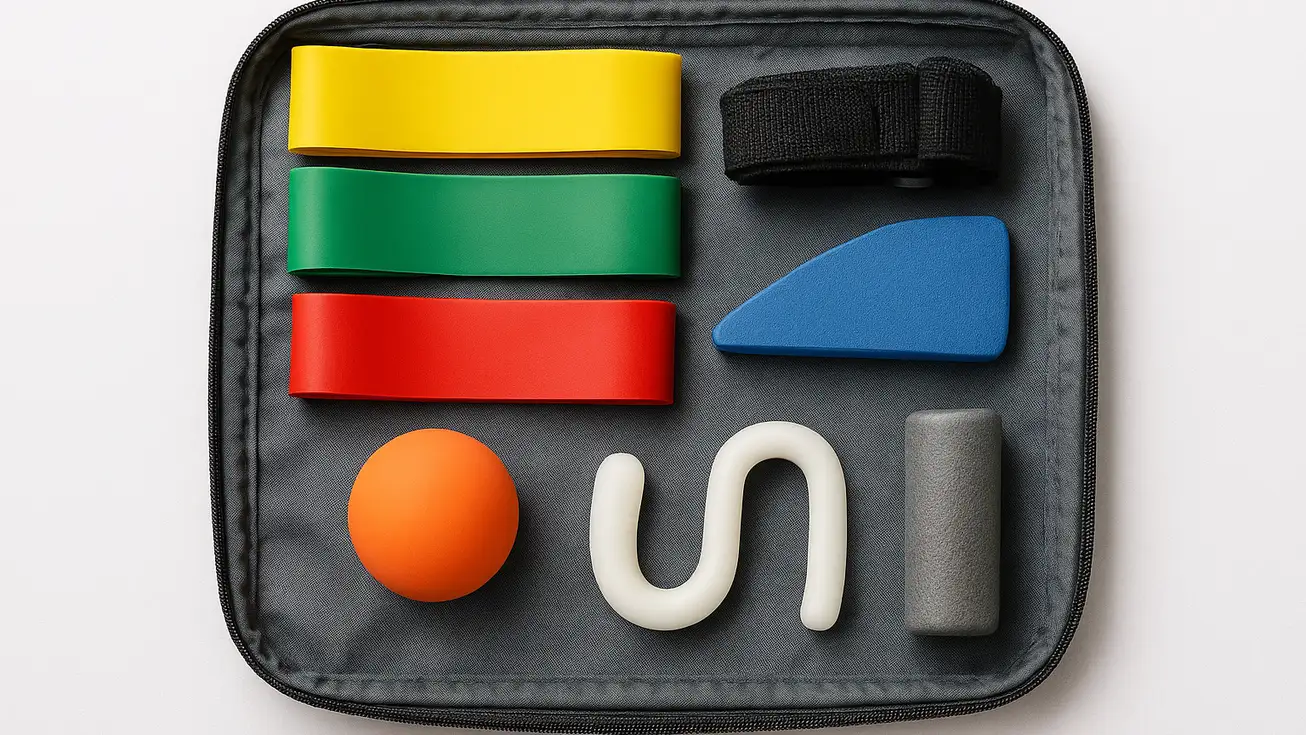
If you are actively rehabbing something, the harder problem is keeping your exercises going without your usual equipment, which is where $35 carry-on kit that keeps earns its space in your bag. A single light band and a lacrosse ball cover most of what a hotel gym is missing.
The Day After Test
Tendon pain reports late. Judge every travel workout by how the tissue feels the next morning, not by how it felt during the session. Mild stiffness that clears within thirty minutes of moving around is fine. Pain that is worse than the day before, lasts past mid-morning, or shows up on stairs and doorknobs means you overshot. Cut the next session by half rather than skipping it entirely, because complete rest tends to make tendons more sensitive, not less.
Come Home With a Tan, Not a Flare
None of these five habits look reckless in the moment. Skipping a warm-up, matching your usual numbers on a new machine, adding incline, jumping straight into a circuit, doing extra to catch up: every one reads as commitment. That is exactly why they slip past people who take their training seriously. The problem is not effort. It is that tendons measure change, and a week away is nothing but change stacked on change.
Treat the hotel gym as a maintenance space rather than a performance one, and almost all of this disappears. Warm up longer than feels necessary, cut your loads on anything unfamiliar, keep the intensity earned rather than borrowed, and let the missed days stay missed. Do that and the tendon you spent months quieting stays quiet, and the only thing you bring home from the trip is the trip itself.
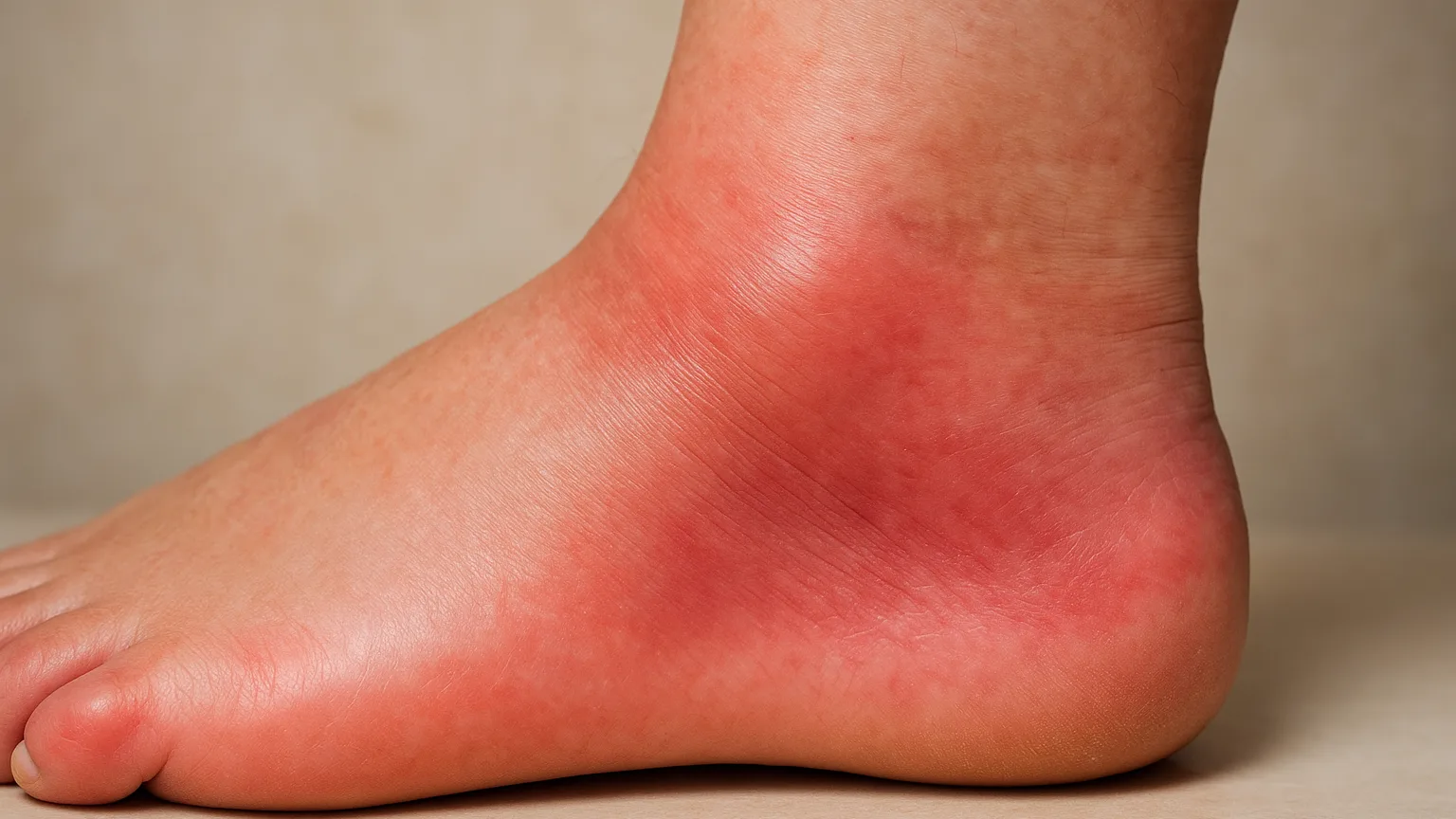
Tendon pain is slow to build and slow to settle
Start with the injury itself, then look at what treatment actually does for a tendon that has stopped healing on its own.